
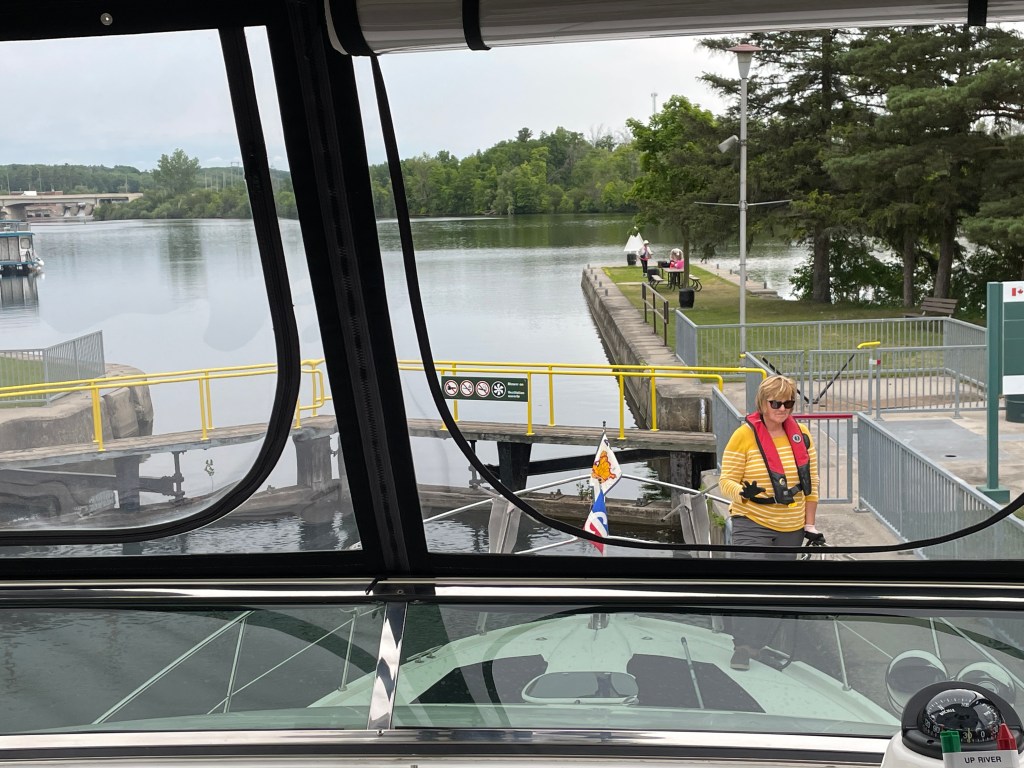
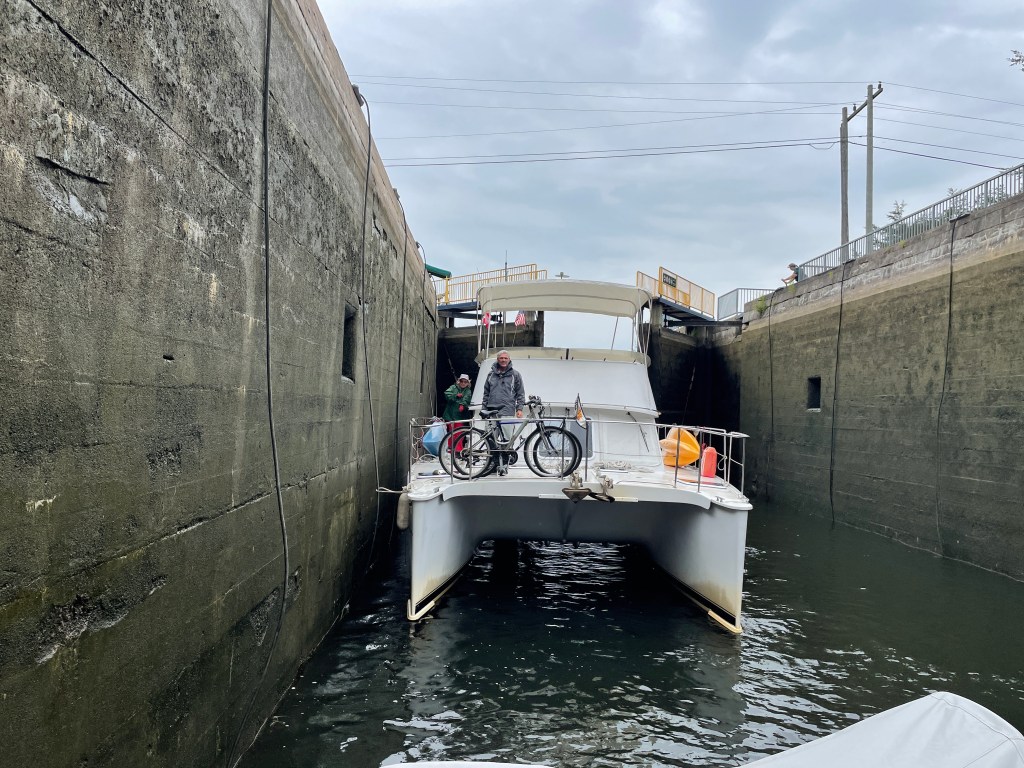
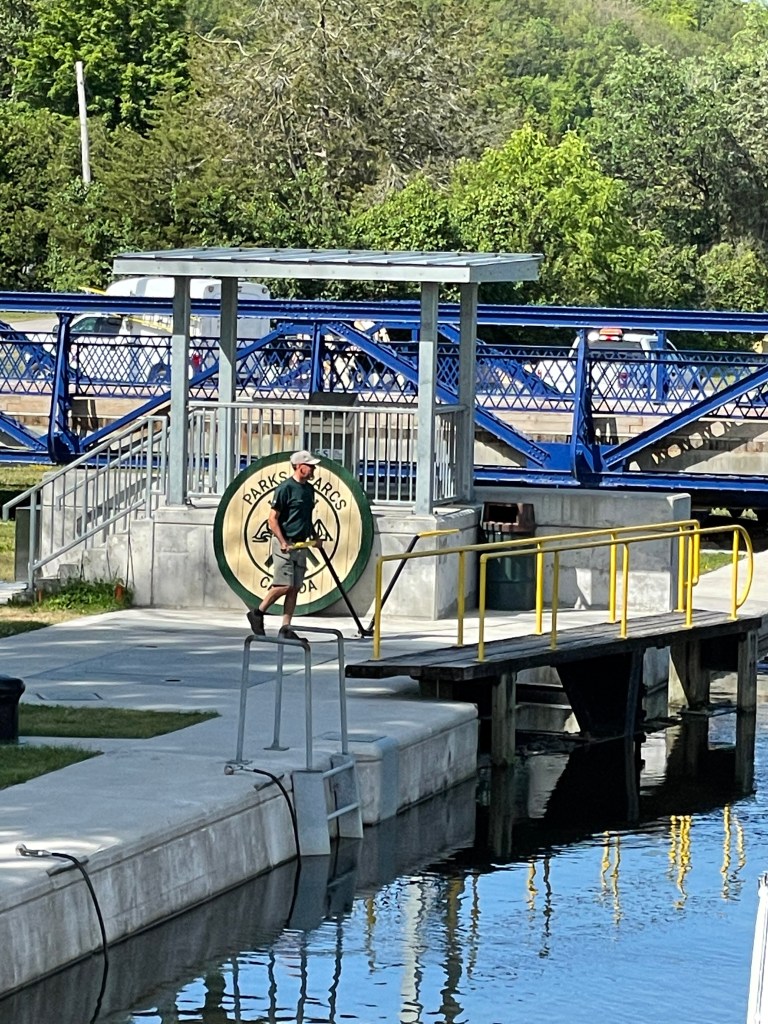
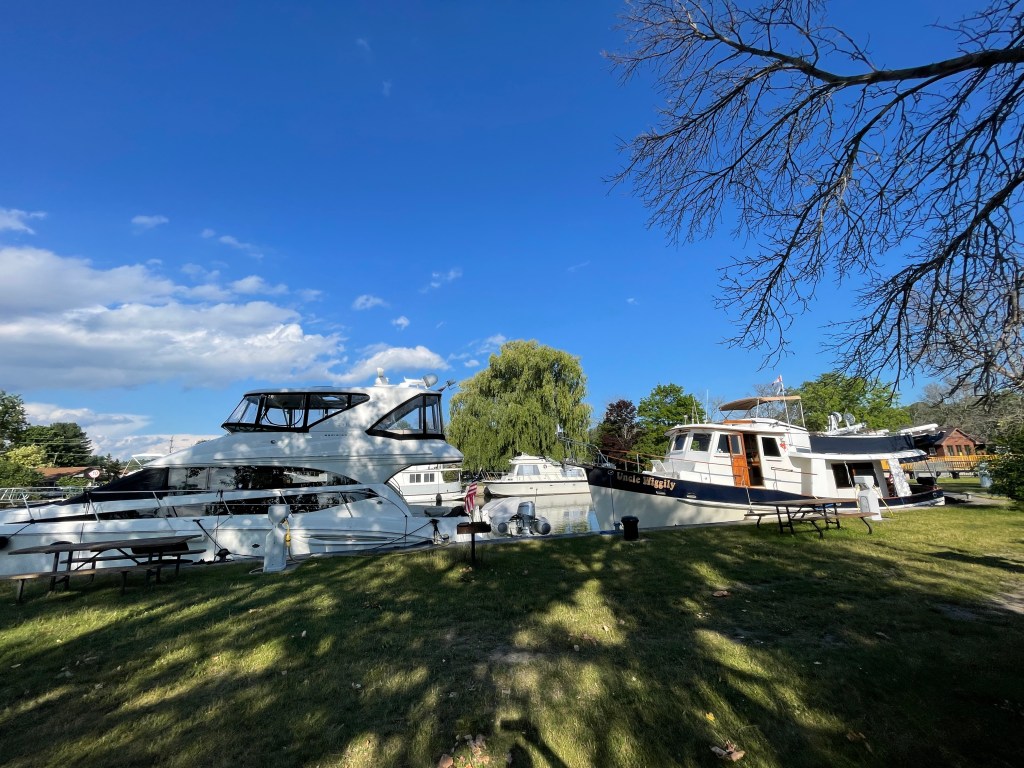
We really weren’t sure what to expect of the Trent Severn Waterway but enjoyed it more than we thought we ever would. We were told we would be going through locks and dams that connect to lakes and staying on lock walls, some in town and some in rural areas and more wooded areas.
The Historic Trent Severn Waterway is comprised of 44 Locks and Dams used only for recreational use. The Trent Severn is 241 miles of waterway that connects many of the lakes within Canada. There is a transit fee for using the locks of $210, to stay on dock walls there is a mooring pass or a charge of $1 a foot per night plus extra for electricity. Most of the locks are operated manually, although several that happen to be in high-traffic areas have been converted to hydraulic. There are three unique locks that are somewhat of an engineering marvel, two lift locks and a railroad car lock that takes your boat on land to get to the next waterway.
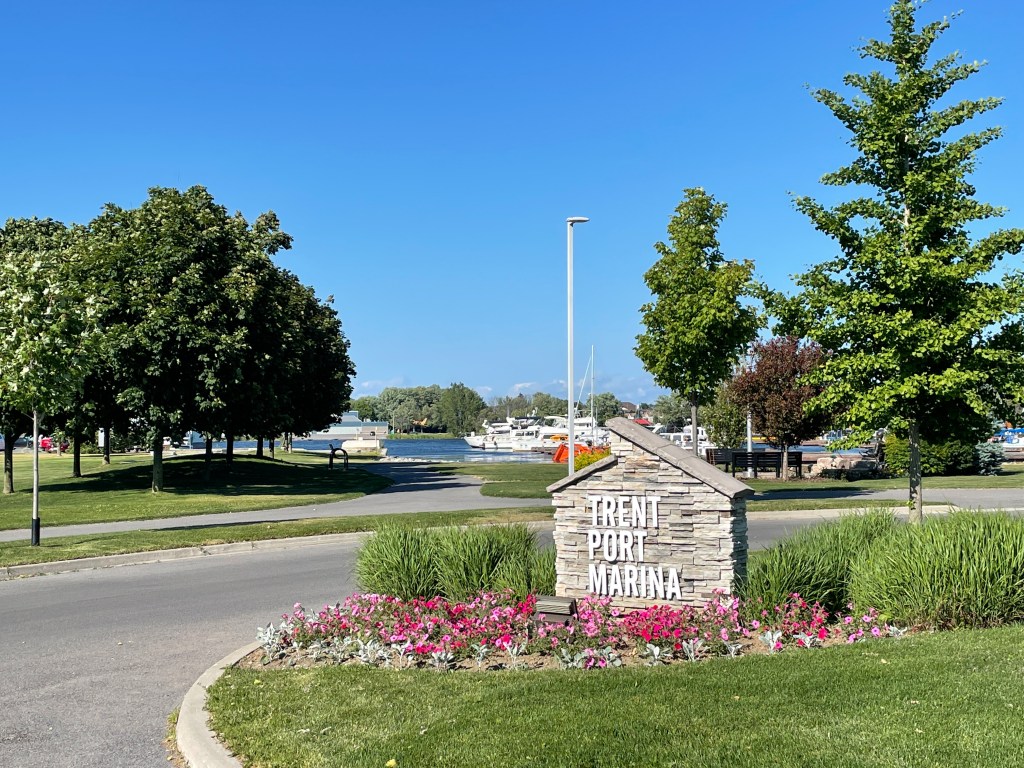
Trent Port Marina is the municipal marina with easy access to the Trent Severn. It was a great marina to stop reprovision for groceries, get fuel and stay the night before embarking on this journey. Interesting experience getting fuel, you not only had to convert liters to gallons to figure out how much you needed but also convert Canadian Dollars to American to figure out how much you paid.



 Reimanns 'round the loop in 2022